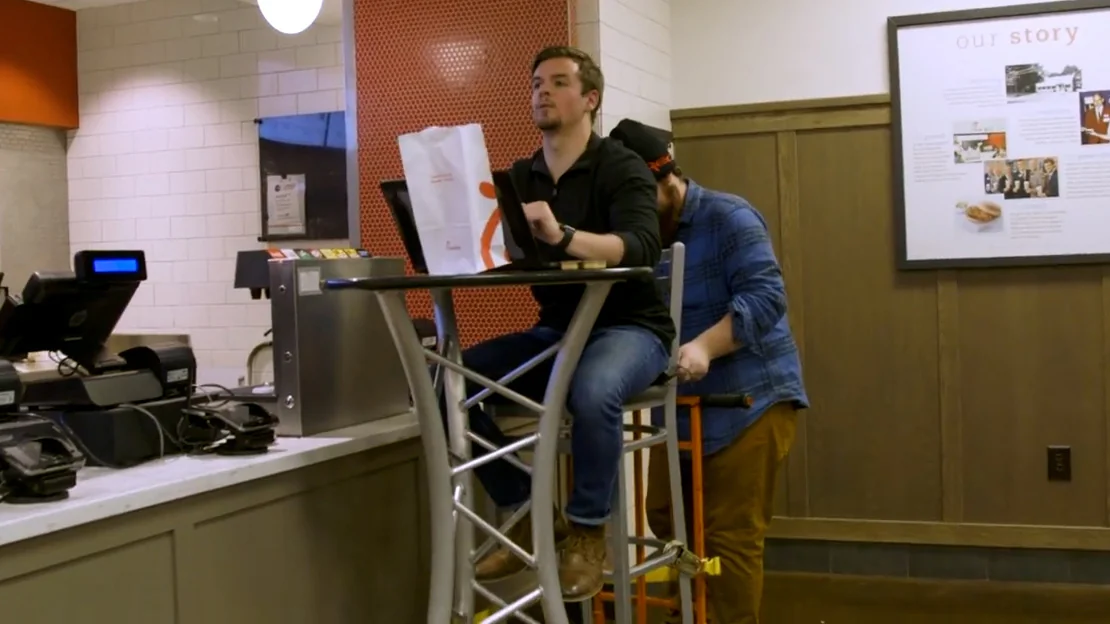
Before returning more fully to narrative screen acting, Jake Crossman built a practical production background across ESPN+, ESPN, NBC, FOX, and live sports broadcast.
He co-created and produced ESPN+'s FUSE, then directed and produced live broadcasts across major sports environments. His broadcast work includes NFL, MLS, College Football, College Basketball, Division I Men's Ice Hockey, College Volleyball, College Softball, College Soccer, and College Tennis. He also worked as a crew manager and line producer on FOX's Super Bowl LIV telecast.
On an actor site, that background matters only if it explains something useful about the performer. For Crossman, it does. Live broadcast is pressure, timing, communication, and public problem-solving. Those habits carry directly into how he works on camera.
FUSE and The Start Of A Production Lane
FUSE gave Crossman an early bridge between hosting, writing, producing, and sports-comedy storytelling. The ESPN+ series required a different kind of creative discipline than a traditional scripted project. It had to be entertaining, fast, structured, and aware of the sports audience it was speaking to.
That kind of work is useful because it teaches economy. A segment either plays or it does not. A joke either lands or it does not. A host either carries the room or loses the rhythm. Those lessons show up later in screen acting, especially in short-form work where the audience decides quickly whether a moment is alive.
ESPN / NBC / FOX Live Broadcast
Crossman's later work in live broadcast expanded that pressure. Sports production moves in real time. There is no second take for a live play, no pause button for a missed cue, and no value in panic once something changes. The crew has to adjust, communicate, and keep the show moving.
That environment builds a specific kind of professional calm. It teaches people to respect time, understand the camera's needs, and solve problems without making the room heavier. For an actor, those habits are practical. They affect how someone arrives on set, how quickly they take direction, how well they reset, and whether they understand the work happening around them.
Super Bowl LIV and High-Pressure Production
Working on FOX's Super Bowl LIV telecast added another scale of production experience. A Super Bowl broadcast is not only a sports event. It is a massive live television operation with national attention, layered logistics, and no tolerance for confusion.
That credit is not presented on the site as a detour from acting. It is part of the same public argument: Crossman knows what pressure feels like on a real set, in a real truck, on a real broadcast day. He understands that the performance is one piece of a larger machine, and that professionalism is not abstract. It is how the day keeps moving.
How It Shapes The Acting Work
Crossman's current screen work includes vertical drama, courtroom television, film, short film, and comedy. Those environments are different, but all of them reward preparation and responsiveness. A vertical set may need speed. A courtroom scene may need directness. A film scene may need patience and continuity. A comedy beat may need timing that still feels loose.
The broadcast background gives Crossman a practical foundation for that range. He is used to thinking about frame, pace, audience attention, and production needs. That does not make the performance less personal. It makes the work more usable.
This is why the About page now treats live broadcast as context rather than the headline. The headline is the acting. The background explains the way he works: prepared, flexible, camera-aware, and built for modern production environments.